

An eyebrow enquiry needs a clearly identified intervention
Eyebrow transplantation, tattooing, microblading and surgery that changes brow position are different interventions. A patient may have received more than one of them, but the records should show which service is being questioned. The legal review should identify whether the concern relates to transplanted hair, existing pigment, the shape agreed or a separate procedure. A booking described simply as eyebrow restoration may leave those distinctions unclear. Begin with the actual treatment date, provider and plan rather than assume that every visible change came from the same intervention.
Emre Gültekin, a lawyer at Vensa Law, can examine legal issues concerning eyebrow transplantation in Turkey. The purpose is to connect the patient's objectives and the course of care with reliable evidence. A change in appearance may be important without independently proving negligence. Conversely, a photograph that appears acceptable to someone else does not resolve a supported concern about the agreed service or clinical care. The patient can describe the feature that matters to them while an appropriate clinician assesses the findings and any proposed relationship with the treatment.
Distinguish enhancement from reconstruction of a missing area
ISHRS patient information describes restoration of part or all of an eyebrow and the importance of individual assessment and agreed design. A patient seeking a thicker existing brow may have a different objective from someone seeking reconstruction after an injury. The original purpose should therefore be identified before the result is evaluated. Which part of the brow was to be restored, and what was to remain unchanged? Preserve the consultation record and any explanation of limitations. The general name of the service does not answer those individual questions.
The reason for missing hair may also be relevant to clinical planning. Keep any diagnosis, earlier treatment or injury history that was available before surgery. A legal assessment should not diagnose the cause from a current photograph. If a later clinician believes the starting condition affected suitability or outcome, ask for the reasoning and the evidence available. The opinion should distinguish current findings from what can responsibly be inferred about the earlier date. Missing baseline information is a limitation to acknowledge rather than a reason to invent a precise pretreatment condition.
The marked design should be read in its context
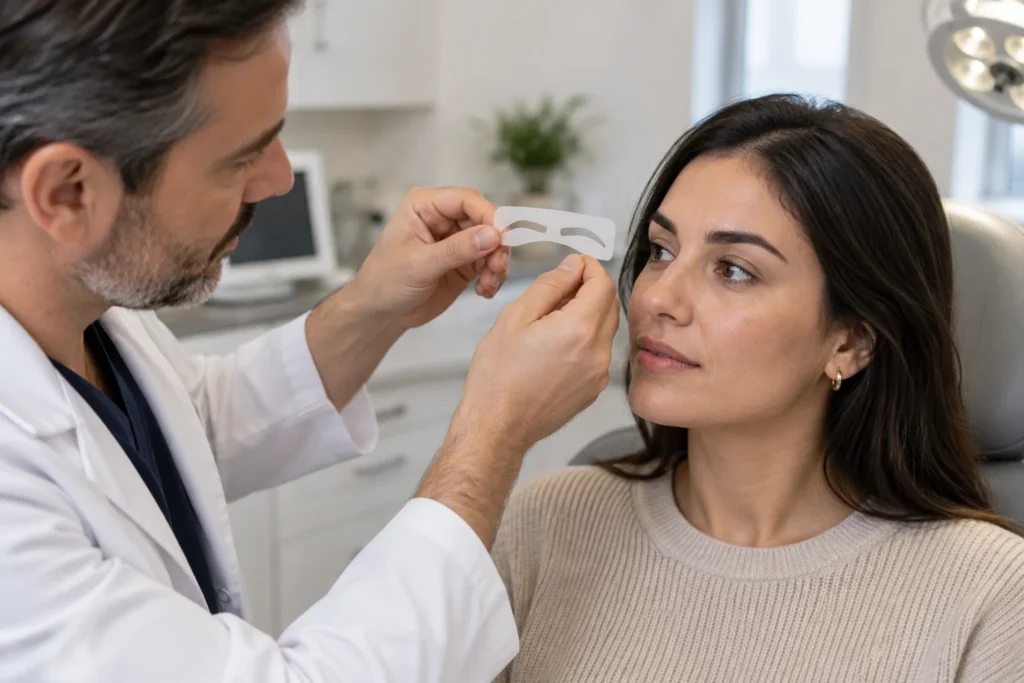
A design photograph can show what was proposed, but it should be linked to the conversation and stage at which it was taken. Was it an initial sketch, a revised plan or the final design approved before intervention? Identify which brow, region and feature are in dispute. Height, arch, length, width and the relationship between the two sides can raise different questions. The review should not replace them all with a single statement that the eyebrows are wrong. A precise description helps both the clinician and lawyer understand the concern.
A signature should also be considered in context. It may relate to an agreed outline, a general consent form or an attendance record. The legal significance depends on the document and circumstances. If the patient says the design changed after approval, preserve the earlier version and the later explanation. If there is evidence of a discussed and accepted change, include it. The objective is an accurate account of the decision, not a selection of photographs that removes qualifications or makes a preliminary sketch appear to be the final promised result.
Assess symmetry against the individual baseline
Patients may compare both brows and notice a difference in shape or density. Pretreatment evidence matters because the original pattern and facial expression can affect that comparison. A photograph taken while raising one brow may not provide the same information as a neutral expression. Lighting, angle and image mirroring also need consideration. The images can still document the patient's concern if their limitations are acknowledged. A clinician should explain which observed differences may relate to the transplantation and which cannot be attributed confidently on the available evidence.
A desire for closely matching brows is relevant to the agreed objective, but should not be converted into an unsupported guarantee of mathematical symmetry. Equally, the existence of baseline asymmetry does not automatically explain a new change. A later opinion should engage with both the starting condition and the current findings. The patient need not produce exact measurements that were never recorded. A reasoned account can distinguish a documented alteration, an uncertain difference and a clinical recommendation without treating all three as proof of the same failure.
Existing pigment can complicate the visual account
Some patients have earlier tattooing, microblading or other cosmetic work in the eyebrow area. Identify the history and what the treating clinician knew. The current appearance may combine pigment, natural hair and transplanted hair. A complaint about one element should not automatically be assigned to another. Preserve earlier images and any record of discussions about the existing work. This is especially relevant where the patient says the new design followed an old outline rather than the shape agreed at consultation. The actual plan and evidence need comparison.
If pigment removal or further cosmetic work is later proposed, clarify the purpose and the condition it addresses. A quotation for such treatment does not itself establish that the transplant caused the pigment concern. Nor should the presence of old pigment be used to dismiss a separate complaint about graft placement. The clinician can explain the current findings within their expertise. The legal review can then consider the relationship between the interventions, the agreement and any claimed costs. Different providers and dates should remain identifiable rather than merged into one undifferentiated treatment history.
Hair direction and maintenance expectations are separate questions
A patient may report that transplanted hairs do not lie as expected or need more attention than anticipated. Identify the particular observation and its practical effect, without assuming the cause. A question about ongoing grooming information differs from a question about clinical placement. The consultation and aftercare records may help establish what was explained. A clinician can assess current hair characteristics and the significance of the observed pattern. This guide does not prescribe how to trim, remove or redirect transplanted hair; individual advice should come from the treating professional.
If another clinician proposes correction, ask what finding the proposal addresses. A new aesthetic preference does not automatically establish defective care. At the same time, agreement on a broad shape does not answer every question about how the hair was placed. The report should distinguish the present examination from retrospective criticism and explain the supporting evidence. An unexplained statement that the brows need redoing may be a commercial treatment offer rather than a reasoned opinion on the original procedure. Its actual purpose should remain clear when it is provided to a lawyer.
Density concerns need timing and regional detail
A patient may be satisfied with one part of an eyebrow but concerned about another. Describe the affected region and the timing rather than use only a total graft figure. The agreed coverage, distribution records and present findings may be relevant. Clarify whether any number was an estimate, a planned allocation or a recorded final total, and whether it concerned grafts or hairs. Photographic counting by the patient should not be treated as a verified operative number. A clinical estimate should state its method and limitations.
The stage of assessment also matters. A webpage cannot determine whether the individual's result has reached a point at which a final opinion is appropriate. An examining clinician can explain what is assessable now and what remains uncertain. Preserve the original provider's expected course as information given, while distinguishing it from independent findings. If another session is proposed, clarify whether it was anticipated in the initial plan or suggested only after a concern. Neither situation automatically establishes appropriate or inappropriate care; each requires the actual explanation and evidence.
Skin findings and eye complaints should not be merged
A concern may involve visible marks or an uneven surface around transplanted hair. Another may involve symptoms relating to the eye or surrounding area. These should be described separately and assessed by an appropriate clinician. A photograph that documents eyebrow shape may not explain an eye complaint. Likewise, a general statement that the brows look attractive does not resolve a health concern. Preserve any examination and intervention records, including the date and reason for care. The legal review should not infer an eye diagnosis from an appearance image.
Current significant or unexpected symptoms require clinical attention. Evidence gathering should not delay necessary treatment, and this page does not give medical management instructions. If further care alters the existing appearance, ask the treating professional to document findings as part of ordinary care. The original procedure, the response to reported concerns and any resulting harm can raise distinct legal questions. A complication does not automatically prove negligence, while a known risk does not establish that its recognition or management was adequate. Individual clinical evidence is needed to assess the actual course.
Include the donor procedure in the history
The recipient eyebrows may be the patient's main focus, but the area supplying grafts is also part of the treatment. Identify the donor site, the method described and any separate concern there. The actual records should clarify the transfer; a package name may be insufficient. Pretreatment and subsequent images may help, subject to their limitations. A complaint about donor appearance should not be assumed to have the same cause as sparse eyebrow growth. Each issue needs its own description, findings and relationship to the care being questioned.
Where correction would involve further harvesting, the clinician should consider its suitability and explain the proposed scope. The lawyer should not assume that additional donor hair can always resolve a shape, direction or skin concern. The intended benefit and remaining limitations matter. A broader corrective plan may include optional cosmetic changes or care unrelated to the original concern. Those elements should be identified before the total quotation is used as a claimed loss. The review should distinguish possible future choices from established clinical needs and completed expenditure.
Information, professional roles and the provider relationship
Turkish patient rights rules address information and informed consent. The review can examine the proposed design, donor and recipient work, limitations and material changes discussed before the decision. If language support was needed, identify who translated and whether the relevant intervention was explained. A form's signature and language should be assessed with the full circumstances. A late change in the areas treated should not automatically be assumed to fall within an earlier general approval. Equally, contemporaneous explanations should not be omitted because they complicate the complaint.
Identify who assessed suitability, agreed the design and performed the relevant steps. A named doctor in advertising and the people encountered during surgery may require clarification through records. Facility authorisation and permitted roles need Turkish rules applicable to the treatment date; a foreign professional-society description is not a substitute. The service agreement, clinic invoice and payment information help identify the relevant entities. A coordinator's contact details alone may not establish the legal healthcare provider or show which participant undertook each obligation in the patient's particular arrangement.
Consider correction and legal options without assuming the result
An offered second procedure should explain what will be done, who will do it, the costs and its clinical suitability. It may address one concern while leaving another unresolved. A release or settlement should be reviewed separately from the clinical decision. Free work is not automatically an admission of fault or a suitable remedy. The patient's objectives may include an explanation, independent assessment or reimbursement rather than another operation. Identifying those objectives helps evaluate the offer on its actual terms.
Responsibility, causation and recoverable loss require individual evidence. Keep invoices, payment records and documentation of relevant practical effects. Estimates and optional changes should be distinguished from necessary completed care. A records request, regulatory complaint and damages claim can serve different purposes, and an informal repair discussion should not be assumed to suspend legal time limits. Relevant dates should be examined promptly. There is no standard financial award for eyebrow asymmetry or a particular graft count, and another patient's outcome does not determine the prospects of this patient's matter.
Speak with Vensa Law about the eyebrow treatment
A focused first account can identify the date, facility, areas treated, agreed design and current concern. Include useful records and any later clinical opinion, stating whether another intervention is scheduled. Separate personal observation from a professional conclusion. There is no need to diagnose a technical error before seeking guidance. The review can identify missing information, clinical questions and the appropriate legal process. A clear chronology should preserve uncertainty where necessary rather than create details to make the account appear more complete.
Emre Gültekin works as a lawyer at Vensa Law. Firm information is available at https://vensalaw.com/; enquiries can be made through +905369968588 or [email protected]. The scope of any engagement and the documents required can be discussed for the particular treatment in Turkey. Advice should explain what the evidence supports and the options available. An initial consultation does not guarantee compensation, a finding of fault or a successful correction. The patient's individual agreement, clinical course and documented effects remain the basis for a responsible legal assessment.