

When a crown raises questions about dental care
A dental crown dispute concerns more than whether a restoration looks attractive. The patient may be unable to chew comfortably, may have lost a crown repeatedly, or may have been told that a previously healthy tooth now requires further treatment. Another patient may feel that an irreversible procedure was undertaken without a clear explanation. These concerns need different evidence. A review should identify the particular tooth, the proposed purpose of the crown and the point at which the treatment departed from the patient's understanding. Neither dissatisfaction nor a replacement recommendation settles the question of negligence.
Emre Gültekin, a lawyer at Vensa Law, can examine the legal aspects of crown treatment received in Turkey. The initial task is to connect the clinical questions with the treatment agreement, the people involved and the evidence of any resulting harm. A legal review cannot diagnose the tooth from a photograph or decide which restoration should now be fitted. A dentist's assessment may be needed alongside the records. The patient's immediate care and the evaluation of earlier treatment can proceed together without assuming that one must await the other.
Understand what was fitted and what was promised
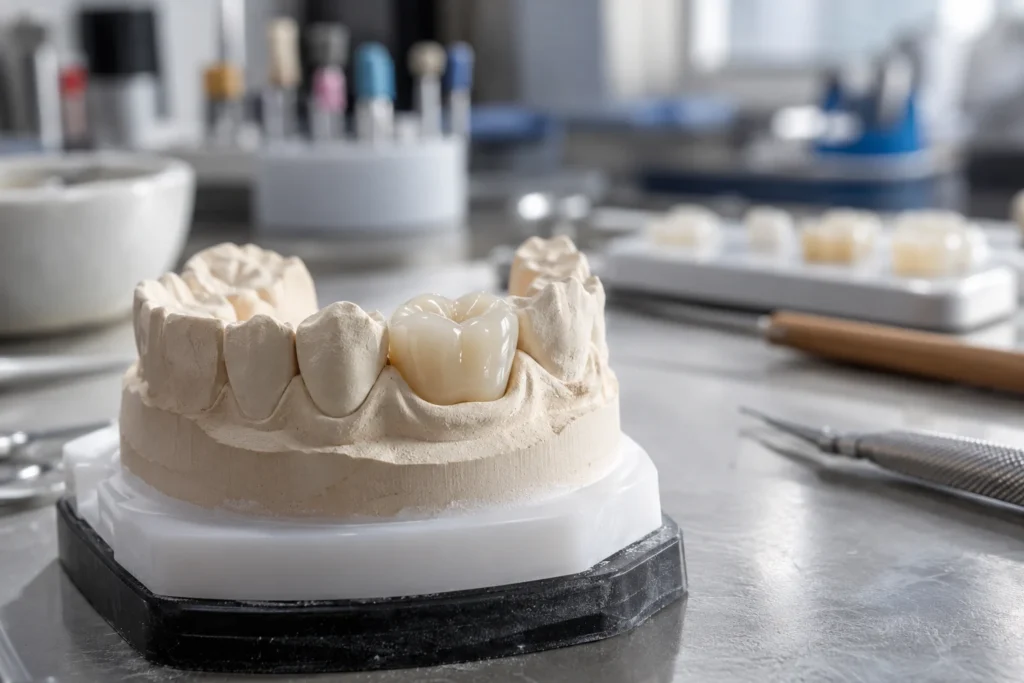
A crown covers a prepared natural tooth. It differs from a veneer placed over part of a tooth, and from an implant fixture replacing a root. The NHS explains that crowns may be used for damaged or decayed teeth and that preparation changes the existing tooth. The useful question in a dispute is therefore not simply whether the invoice says zirconia or porcelain. It is which teeth were prepared, what condition they were in, and what the patient understood would be done. Marketing expressions such as smile design may obscure these distinctions unless the written plan specifies the actual restorations.
Ask for the tooth numbers, material description and laboratory information available for the work. A treatment sold as several separate crowns may differ from connected bridgework supported by fewer teeth. The distinction affects how later problems should be investigated and what a replacement quotation actually proposes. A material label alone does not establish suitability, durability or defective manufacture. Where the patient believes a different material was supplied, the review should compare the promise with available technical evidence rather than rely solely on appearance or a sales representative's description.
Examine the reason for preparing each tooth
The starting condition is central because crown preparation is an intervention on existing tooth structure. A patient may have consented to restoration of a fractured tooth but question the preparation of neighbouring teeth. The initial examination, images, photographs and proposed alternatives can help establish why each tooth was included. An independent dentist should be asked to address the actual indication and available information, rather than merely state which treatment they would prefer today. Different acceptable approaches can exist, and a difference in professional preference is not automatically proof that the original decision was unreasonable.
For extensive crown work, a tooth by tooth account is often clearer than a single allegation that the whole mouth was damaged. The account can identify the teeth already restored, the teeth reported as painful beforehand and the teeth that became symptomatic later. If pretreatment records are missing, that limitation should be acknowledged. Family photographs may show earlier appearance but usually cannot establish decay, internal tooth condition or the clinical reasons for intervention. A balanced analysis separates what the records demonstrate from matters that remain for clinical opinion or further enquiry.
Consent should address the procedure the patient received
Turkish patient rights rules address information, informed consent and access to records. For crown work, the relevant discussion may include the intended benefit, the preparation involved, meaningful alternatives and the limitations of the proposed outcome. A signature is evidence to examine together with the explanation, its timing and the patient's ability to understand it. A broad consent form bearing many procedure names may leave uncertainty about which teeth and which treatment were actually discussed. Conversely, a patient's later recollection should be compared fairly with the contemporaneous documents and communications.
Language is particularly relevant when treatment is arranged through an overseas coordinator. Establish who translated, whether the treating dentist participated and whether the final plan changed after arrival. Save the original version of the estimate and later amendments. Agreement to a colour at a try-in appointment does not necessarily answer whether the patient consented to preparation of additional teeth. These are separate decisions. A lawyer can identify which aspect of the decision is in dispute, while a dental opinion can explain why the omitted information might have mattered to the clinical choices available.
Preparation, temporary crowns and the laboratory stage
Crown care can involve preparation, an impression or scan, temporary protection, laboratory work and final fitting. The University of Bristol's patient information describes both preparation and cementation appointments, but its local timetable should not be treated as a universal standard for treatment in Turkey. What matters is how this patient's stages were planned and recorded. If temporary crowns were uncomfortable or repeatedly detached, note the dates and the response received. These events may explain the course of treatment, although they do not by themselves establish that the final work was defective.
Laboratory prescriptions, scans and records of adjustments may help explain differences between the proposed restoration and the delivered crown. Patients should request what exists rather than presume that every clinic retains the same categories of material. If a crown was remade before final fitting, establish why and whether concerns were resolved. A documented change can reflect an appropriate attempt to improve the work. The legal enquiry should evaluate the process and outcome fairly, including explanations offered by the treating dentist, without treating every revision as an admission of fault.
A bite complaint needs a precise description
Patients may say that the bite feels high, the teeth no longer meet evenly, or chewing is uncomfortable on one side. Those descriptions are useful observations, not diagnoses. Record when the sensation began, whether it changed after an adjustment and which teeth were involved. If several adjustments took place, preserve the notes for each visit. The fact that a restoration looks acceptable in a frontal photograph does not resolve a functional complaint. Equally, discomfort alone does not identify the cause or establish how the initial fitting should have been performed.
An independent assessment should distinguish the patient's reported experience from the examiner's findings. It can explain the current condition, the further investigation required and any opinion about the earlier care supported by available records. Where the opinion depends on missing pretreatment information, the report should say so. Avoid asking a dentist merely to sign a conclusion drafted by someone else. A reasoned account of observed findings and their limitations is usually more helpful to legal review than an unexplained statement that the crowns are bad or need replacement.
Pain, loosening and damage to the underlying tooth
A crown may become the focus of a dispute after pain, loosening, fracture or a later recommendation for root canal treatment. The sequence deserves careful investigation. Was the tooth already symptomatic? Was the crown temporary or final? Did a further dentist remove it, and what was observed underneath? The NHS distinguishes crown restoration from root canal treatment. A patient who later needs both procedures should not assume that the second procedure proves the first was negligent. The relationship between events requires clinical assessment, supported wherever possible by dated observations and images.
Current health concerns should be addressed by an appropriate dentist. Legal documentation should not delay necessary care, and this guide does not provide instructions for removing a crown or treating symptoms at home. When urgent treatment changes the tooth, ask the treating professional to document the findings and intervention as part of ordinary care. Keep the treatment note, any relevant images and the reason for the procedure. If a crown is removed and can appropriately be retained, ask about safe handling; do not interrupt clinical care merely to preserve an object for a possible claim.
Appearance and shade disputes require their own evidence
Aesthetic concerns can include shade, shape, visible margins or a difference between the approved design and the fitted result. The evidence should distinguish a specific promise from a general advertising image. Save the shade choice, mock-up photographs, try-in communications and any written explanation of limits. Photographs taken under different lighting or camera settings can make comparison misleading. They may still help document the sequence, provided their date and origin are clear and the patient does not edit the images to strengthen the complaint.
The analysis should also distinguish appearance from the health of the supporting tooth and tissues. A request for a different shade does not establish a clinical defect, while an apparently attractive result does not rule out one. Where the dispute concerns the opportunity to approve the work, identify whether the concern was raised before final attachment and what response followed. If the patient was told that a temporary appearance would improve after a later step, preserve that explanation. The legal significance depends on the actual agreement and evidence, rather than a universal entitlement to an exact photographic result.
Replacement proposals do not automatically measure the loss
A later dentist may propose replacing one crown, several crowns or all the restorations. Those recommendations should be compared with the condition found and the reason each item is included. A comprehensive new plan can combine necessary corrective care with upgrades or treatment of unrelated disease. The total price therefore needs explanation before it is used as a claimed loss. Where practical, request a written breakdown that identifies the tooth, the proposed work and the clinical reason, without asking the dentist to adopt a legal position beyond their expertise.
Preserve invoices and proof of payment for consultations, imaging, temporary measures and further treatment. Distinguish completed spending from estimates for future work. Travel and other claimed expenses should be linked to the relevant event and supported by records. A review may also consider documented effects on daily life, employment or psychological wellbeing, where relevant evidence exists. No standard compensation figure follows from the number of crowns alone. Responsibility, causation and recoverable loss need individual analysis, including the possibility that only part of a later treatment plan relates to the original concern.
Identify the treatment provider and any intermediary
A booking may involve a dentist, clinic company, laboratory, tourism agency and overseas salesperson. Their roles should be established from the documents. Payment to a coordinator does not necessarily show who performed the care, while the name on a promotional account may not identify the legal service provider. Collect the treatment invoice, agreement, payment details and practitioner information available. If several clinics were visited, distinguish their work and dates. The question is which person or entity undertook which obligation, not simply whose logo appears most often in the correspondence.
The appropriate legal route depends on matters including the provider's status, the agreement and the particular allegation. A request for records, patient rights complaint and damages claim can serve different purposes. A complaint does not automatically secure compensation or suspend a claim period. Relevant dates should therefore be reviewed promptly rather than waiting indefinitely for an informal promise to repair the work. Vensa Law can consider the available route after examining the actual circumstances; this page does not assume that every international crown dispute belongs before the same court.
Evaluate a proposed remake before agreeing to final terms
An offer to replace a crown may be useful, but the patient should understand what is being offered. Clarify which teeth are covered, who will perform the work, whether examination is required and who bears associated costs. A remake promise may leave unresolved the reason for the problem or the condition of the underlying tooth. The clinical suitability of further work needs dental advice. The legal effect of any release, settlement or acceptance document should be considered separately, especially if the wording extends beyond the particular restoration being replaced.
Keep discussions factual and preserve the complete exchange, including explanations that do not support the patient's initial view. Avoid signing a statement that the whole matter is resolved merely to obtain records or an appointment without understanding its terms. Equally, an offer of further care should not automatically be described as an admission of negligence. A careful assessment can compare practical correction, evidence preservation and the scope of any proposed compromise. The patient's preferred outcome may include an explanation, safer ongoing care or reimbursement, and those objectives should be identified accurately.
Discuss the crown concern with Vensa Law
A useful first enquiry states when treatment took place, which teeth are affected and what outcome the patient now seeks. Include the original plan, the most relevant correspondence and any independent assessment already obtained. Clearly identify a scheduled replacement appointment or an unresolved health concern so that the review reflects the current situation. There is no need to create a technical diagnosis or an inflated claim before seeking advice. A short factual account can be expanded after the available evidence and the missing records have been identified.
Emre Gültekin works as a lawyer at Vensa Law. Information about the firm is available at https://vensalaw.com/; enquiries can be made on +905369968588 or at [email protected]. The scope of any engagement, the documents needed and the next steps can be discussed for the individual matter. The purpose of an initial review is to establish what can responsibly be assessed about the crown treatment and the legal options arising from it. Neither an adverse result nor a preliminary enquiry creates a guarantee of recovery or a predetermined conclusion about the treating dentist.