

Identify the eye-care decision being questioned
An eye-treatment enquiry may begin with a problem after an operation, an alleged delay in diagnosis, a disagreement about the procedure selected or a concern about follow-up. These are different starting points. The first legal task is to identify the decision, act or omission being questioned and the evidence connected to it. A broad statement that eyesight became worse does not yet explain which part of the care requires investigation.
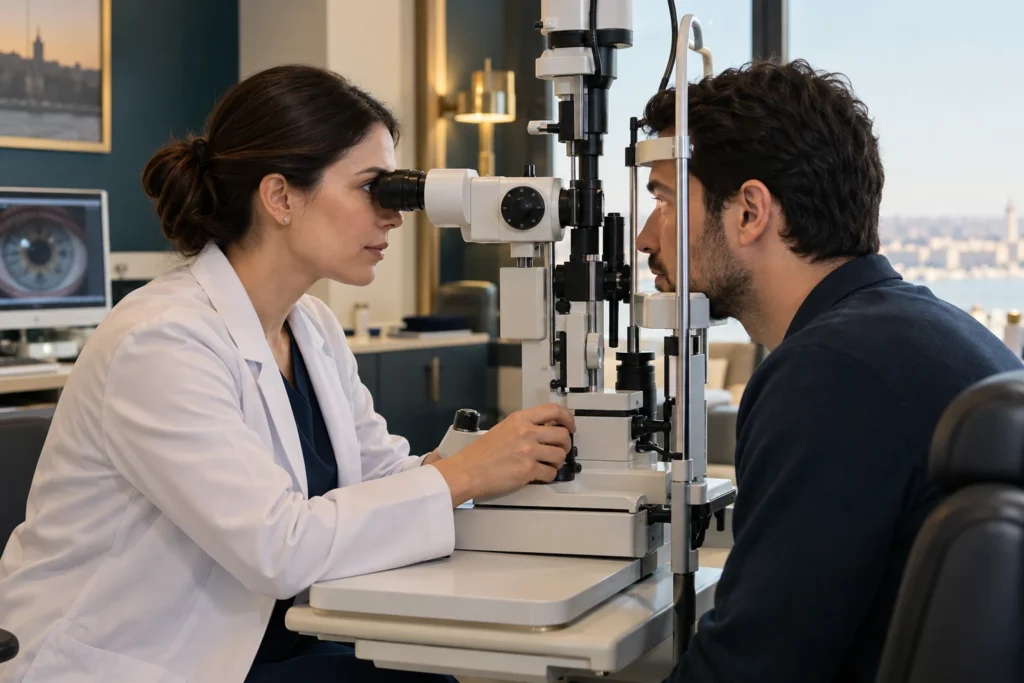
Emre Gültekin considers eye-care enquiries with the Vensa Law team in Istanbul. The patient's account, examination history, treatment record and later findings are reviewed together. An unexpected visual outcome does not automatically establish negligence. At the same time, describing an outcome as a known complication does not answer whether the individual assessment, information, treatment or response was appropriate. The aim is a clear set of factual and technical questions before deciding on the legal work that may be justified.
Name the procedure, condition and eye
Record the treatment name as it appears in the clinical file and explain the reason it was proposed. Laser correction, cataract treatment, management of another eye condition and an eyelid intervention should not be treated as one procedure. If you do not know the exact name, preserve the documents and describe the uncertainty rather than choosing a technical label from the internet.
Identify the right eye, left eye or both for every relevant event. Where treatment occurred on different dates, make separate entries. A record marked for one eye should not be combined with a result from the other without explanation. If the concern involves an implant or device, retain the identification information available. These details may seem administrative, but they are essential to asking an expert the correct question and attributing a finding to the relevant part of the treatment course.
The baseline before the disputed care
Collect earlier eye examinations, prescriptions, investigation reports and information about previous procedures where relevant. The purpose is to understand what was known before the decision being questioned. Explain the symptoms reported at that time and the effect they had on daily activities. A later diagnosis should be dated and distinguished from the information available during the earlier consultation.
An expert may need to consider pre-existing disease, the condition of each eye and the patient's goals when assessing the proposed treatment. A lawyer cannot determine that baseline from a single prescription or photograph. An incomplete older record should be identified openly. If the provider says a problem existed beforehand, preserve its explanation and the supporting material it identifies. The review should evaluate that position alongside the patient's evidence instead of assuming either account is correct before the records are examined.
Referral, assessment and treatment selection
Keep the referral, booking communications and consultation notes showing how the patient reached the treating professional. If a different procedure was offered after arrival, record what changed and why, as explained to you. A commercial package may include several services without showing which clinician made the patient-specific recommendation.
The adequacy of selection is a clinical question requiring the relevant history and findings. Legal work identifies the alleged omission and its connection to the claimed consequence. A later recommendation for a different procedure does not, by itself, prove that the first choice was negligent. It may raise a question that needs a reasoned comparison of the information available at the time. Likewise, a provider's general confidence in a procedure does not answer whether it was appropriate for this patient and this eye.
Test results should remain complete and interpretable
Request full reports and available original investigation material relevant to the enquiry, including the date, eye and issuing provider. A cropped image or isolated measurement may omit the information needed to interpret it. Preserve the original electronic file where available, and use a separate copy for notes. If a report was translated, retain the original and explain who prepared the translation.
Do not compare numbers from different tests as though they necessarily measured the same thing. The testing method, conditions and clinical purpose may require specialist explanation. A legal representative can organize the sequence and identify which result was available before a decision. The specialist then assesses what that result meant in the circumstances. A chart showing a change may be important, but it is not automatically a complete explanation of its cause, avoidability or legal significance.
Consent and the patient's visual needs
Preserve the consent form and the information supplied about the specific intervention. Explain the discussion of expected benefits, limitations, alternatives and potential problems. Where the patient already had difficulty reading, record how information was made accessible and whether assistance was provided. A large-print document, oral explanation, interpreter or supporter may be relevant to the account, depending on what actually occurred.
The question is not answered solely by the existence of a signature. What was explained and understood, and how the decision was made, may need examination. Equally, uncertainty about a conversation should not become an assertion that no information was given. Identify the language used and any questions asked. If a relative helped, distinguish their recollection from the patient's own account and from the clinician's record. Each source can contribute without being presented as interchangeable evidence.
Record the operation and any change in plan
Where surgery occurred, retain the operative note, device or implant information, anaesthetic record where relevant and discharge documentation. Explain which eye was treated and whether another procedure was performed during the same attendance. If a complication or change of plan was recorded, obtain the complete explanation rather than relying on a short summary in a message.
An additional procedure or an intraoperative event does not automatically establish a breach of duty. The review needs to consider what happened, why it happened, the response and any alleged consequence. A technical opinion may be needed to assess those matters. The legal file should not convert an unfamiliar term in an operative note into a finding of error. Nor should a reassuring summary be allowed to replace the underlying record where the actual event is disputed.
New or worsening symptoms require healthcare
Eye symptoms can have different causes and levels of urgency. Sudden loss of sight or severe sudden eye pain needs emergency medical attention. A legal enquiry should not delay care, and a lawyer cannot decide from a message whether a symptom is harmless or whether an operation is required. Obtain the appropriate assessment and retain the records generated afterward.
For the chronology, state what changed, when it began, which eye was affected and whom you contacted. Use ordinary words unless a clinician has provided a diagnosis. Preserve the date and source of that diagnosis. A symptom following treatment may prompt investigation without proving that treatment caused it. The timing, baseline and examination findings need to be connected through reasoned clinical assessment rather than an assumption based only on the order of events.
Follow-up, access and escalation
Keep the aftercare instructions and planned review arrangements. Identify whom you were told to contact with a concern, how you tried to make contact and the information supplied. If you received advice to attend elsewhere, wait or return to the clinic, retain the exact communication. A message answered by administrative staff should not automatically be attributed to the surgeon.
The response may raise a separate issue from the original intervention. A question about delayed assessment needs the relevant times, clinical information and consequence alleged. Do not assume that a missed appointment necessarily proves fault by either side; explain the reason and communications around it. Where the patient returned home, the arrangements for continuity of care may need particular attention. The legal and clinical review should examine the actual plan rather than assume that international travel removed every follow-up responsibility.
Changes in visual function and daily life
Explain the practical effect of the concern: reading, work, mobility or other activities may be affected in different ways. Distinguish what you personally experience from a clinician's measurement or prediction. If the impact changed with spectacles, another intervention or time, disclose that development. A fair account includes improvement as well as continuing difficulty.
Functional consequences may need supporting records and should not be exaggerated into an unverified permanent disability. An employer's note, assistance expense or clinical assessment may help explain an allegation, depending on the file. The legal relevance of each consequence is assessed within the applicable route. A diagnosis, a reduced test result and a financial loss are connected but different parts of the analysis; one should not be used as automatic proof of all the others.
An independent ophthalmic assessment
A useful opinion identifies the records examined, baseline, current findings and reasoning. It should address the particular question: selection, diagnosis, performance, information or response. A report that states only that vision is poor may leave the alleged breach and causal connection unanswered. Agree the purpose of an opinion before incurring costs, so that the specialist receives the material needed.
Previous disease, other eye procedures and subsequent care must be disclosed where relevant. If findings could have more than one explanation, the opinion should identify the uncertainty rather than conceal it. A lawyer organizes the duties, parties and remedy; the ophthalmic specialist addresses the technical care and causation question. Their work supports one another without either role guaranteeing a particular legal outcome. A strongly expressed conclusion is not a substitute for a reasoned explanation grounded in the individual's record.
Additional care, implants and competing recommendations
A later recommendation for further surgery, a lens-related intervention or another treatment needs its own clinical consideration. Obtain the written plan and purpose where available, and preserve estimates and subsequent notes. Do not make a healthcare decision solely to support a claim. Necessary care should not be postponed simply because it may change the condition being assessed.
If a later professional disagrees with the first provider, record the information each had when expressing the opinion. A difference may result from new findings, a changed condition or a genuine disagreement, and requires examination. Where an implant or device is relevant, retain the details connecting it to the eye and procedure. A product concern and an allegation about selection or use can involve different questions. The evidence should make clear which issue is actually being advanced.
Identify the responsible relationship
The clinic brand, booking agent, hospital and individual practitioner may not have the same role. Keep the agreement, invoice, payment record and communications showing who offered and delivered the service. A referral by one professional does not automatically make that person responsible for every later decision. Conversely, an intermediary's involvement should not obscure the identity of the clinical provider.
The status of a public institution or private provider may affect the legal analysis and process. Emre can examine the actual relationship and allegations rather than assuming the same route applies to every eye-care dispute. Regulatory, administrative and compensation questions may also need separation. A complaint seeking an explanation is not necessarily the same step as a claim for a remedy. Correct identification helps direct a record request or formal allegation to the appropriate recipient.
Document loss and review resolution proposals
Keep receipts for the original treatment, examinations, prescribed or recommended care and alleged additional expenses. Separate paid amounts from estimates. Explain travel, accommodation, assistance and work-related effects with dates and supporting material where available. Not every expense incurred after eye care is automatically recoverable; the legal basis and connection to the alleged wrong still require assessment.
A provider may offer a refund, further treatment or another resolution. Preserve the full terms, including any release, confidentiality requirement or future obligation. Clinical suitability of further treatment remains a medical question even when offered without charge. Understand who would be bound and what remains unresolved before accepting a proposal. Online settlement stories cannot determine the value of a different patient's case, and no compensation figure or outcome follows automatically from the name of the eye procedure.
Organize the first legal discussion
Send any formal decision, notice or court document promptly, including service details. Do not assume ongoing conversations with a provider suspend every time limit. Begin the account with the treatment, eye, dates, specific concern and main records available. Identify missing material honestly, explain ongoing healthcare and mention any steps already taken by another representative.
Emre Gültekin works with Vensa Law in Istanbul. English and Turkish communication can help arrange the evidence and discuss the scope of a possible review. Accessible communication, translation, authority to obtain records and attendance requirements should reflect the individual process and the patient's needs. Fees, expenses and responsibilities are discussed before further work is accepted. Making contact does not itself create an attorney–client relationship. The objective is a clear understanding of the unresolved eye-care question and a proportionate next step supported by the available evidence.