

A hair transplant concern should identify what went wrong
A hair transplant enquiry may begin with sparse growth, a hairline the patient did not expect, visible change to the donor area or a complication during the procedure. These concerns are different. The first legal task is to describe the event or outcome precisely and identify the questions that require medical evidence. A disappointing photograph does not establish negligence, and a consent form does not establish that all care was appropriate. The assessment should connect the original plan, the procedure actually performed and the present concern rather than start with a conclusion about the clinic.
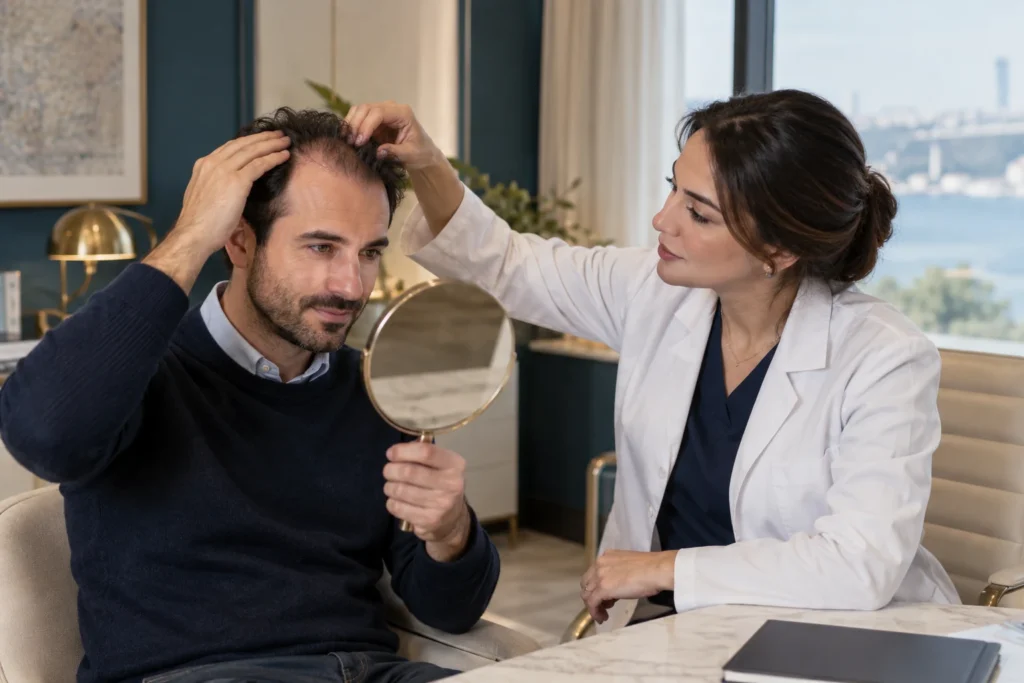
Emre Gültekin, a lawyer at Vensa Law, can examine the legal aspects of hair transplantation received in Turkey. Patients do not need to diagnose graft failure before seeking advice. They can explain what was promised, what they experienced and what a later clinician has said. The review should recognise the distinction between an agreed cosmetic objective, the limits of treatment and evidence of an avoidable injury. Where the cause or maturity of the result is uncertain, that uncertainty should be stated. Legal advice and clinical assessment have different roles in resolving those questions.
Suitability depends on an assessment of the individual
The NHS explains that hair transplantation moves hair to a thinning or bald area and is not suitable for every form of hair loss. That basic distinction matters when the dispute concerns whether surgery should have been proposed at all. Identify the diagnosis recorded before treatment and the examination undertaken. A remote quotation based on a few photographs may not describe the assessment eventually performed in person. Preserve both stages. The relevant issue is how the actual decision was reached, including what information the clinician had and any limitations communicated to the patient.
A later diagnosis may raise a legitimate question about the first assessment, but it should not automatically be treated as proof that the earlier clinician knew or should have known the same thing. Ask the independent clinician to distinguish current findings from retrospective opinion. Relevant history may include earlier procedures, changes in hair loss and information the patient supplied about health or medication. The review should not replace this with an online checklist. It needs to establish which circumstances mattered in the individual case and how they affected the treatment decision being challenged.
The agreed design should be identifiable
A complaint about an unnatural hairline should begin with the proposed design, not a collection of unrelated promotional photographs. Was the line marked before surgery? Did the patient see it and discuss it? Was the concern about height, shape, symmetry, direction or the relationship with existing hair? Save dated design photographs and the associated messages. A signature beside a general statement that the patient approved the result may not explain what was shown before the procedure. Equally, a recorded design discussion should be considered fairly rather than ignored because the patient later became dissatisfied.
The plan may also have prioritised particular regions rather than promised equal coverage everywhere. Identify whether the frontal area, crown or another region was the focus, and what limitations were explained. A clinician can assess the actual pattern and the medical implications of the design. A lawyer can compare that account with the agreed service and the information given. Neither should assume that a computer simulation guaranteed an identical result. If the patient was shown a simulation, keep the original version and any explanation of its purpose rather than present it as a clinical photograph.
Graft numbers need definitions and supporting records
An advertised number may refer to grafts, hairs or a planned maximum. Those descriptions should not be treated as interchangeable without explanation. A patient who believes the number delivered was lower should preserve the quotation, final invoice and operative record available. Counting visible dots from a photograph is not necessarily a reliable measure of the work performed. A clinical professional can explain what can and cannot be inferred from the records. The legal question should identify the particular promise and the evidence for any alleged shortfall rather than repeat a marketing number as an established fact.
Even an accurate count does not resolve every issue about suitability, distribution or outcome. A large number alone does not demonstrate good care, and a smaller number than first discussed may have a clinical explanation. Establish when any change was decided, who explained it and whether the patient's agreement was addressed. If the dispute also concerns charges, separate the pricing method from the clinical assessment. A fixed package and a price calculated per graft can raise different contractual questions. The assessment should read the actual terms instead of assuming that every provider used the same basis.
The donor area is part of the outcome
Patients often focus on the transplanted region and notice donor changes only later. A review should include the area from which hair was taken, using pretreatment and subsequent evidence where available. The concern might be a visible scar, uneven appearance, discomfort or a later clinician's statement about the scope for further surgery. The patient's observation should be recorded accurately without automatically labelling it overharvesting. That is a clinical conclusion requiring appropriate assessment. The size of the package or the appearance of a freshly shaved scalp cannot settle it by itself.
The NHS describes different donor scars associated with different transplant methods. The relevant question is therefore not whether any mark exists, but what method was used, what was explained and what the current findings show. A comparison should account for hair length, lighting and the dates of photographs. Where a proposed repair would use additional donor hair, the new clinician should assess its suitability rather than assume another operation can reverse the concern. Legal review should preserve uncertainty about corrective options and avoid promising that donor appearance or future treatment capacity can always be restored.
Identify who performed each part of the procedure
A booking may emphasise a named doctor while the patient recalls working mainly with other team members. Establish who assessed suitability, planned the design, performed the relevant operative steps and supervised care. The patient's memory is useful, but titles and roles should be checked against available records. Calling someone a technician, nurse or doctor in a message does not establish their legal authority or what they actually did. Conversely, the presence of a doctor's name on an advertisement does not prove that the doctor performed or supervised every part of the patient's treatment.
Turkey has a specific regulatory framework for hair transplantation units, listed by the Ministry of Health. Questions about the unit's authorisation and the team's roles need to be checked under the rules applicable to the treatment date. Overseas professional registration systems should not be imported as Turkish requirements. A regulatory concern and a claim for harm also require separate analysis: one does not automatically prove every element of the other. Preserve the facility name, address, practitioner information and treatment date so that the relevant authorisation questions can be examined without relying on a brand's social media profile.
Medical complications need a clinical history
Bleeding, infection and anaesthetic reactions are among the risks described in NHS patient information. Their occurrence is not automatically evidence that the procedure was negligent. The assessment should examine the particular event, its management and any resulting harm. Describe when symptoms appeared, which professional assessed them and what intervention followed. If care was obtained elsewhere, keep that provider's report rather than summarise it only through messages to the original clinic. An independent clinician may need to consider whether the recorded response was appropriate and how the event affected the outcome.
Current severe or unexpected symptoms require clinical attention; legal evidence gathering should not delay that care. This page does not prescribe medication, washing methods or a postoperative timetable. The treating clinician should give individual instructions. Where the patient believes advice was delayed or difficult to obtain after returning abroad, preserve the contact attempts and responses. An unanswered message and an unanswered emergency request may raise different factual questions. The review should identify what information the clinic actually received and when, rather than assume that it knew the severity of a problem from an unclear photograph.
Growth concerns must be assessed at an appropriate stage
A patient may become concerned soon after the procedure or after being told that the final result should already be visible. The timing matters, but a website should not decide the maturity of an individual's result. Ask the examining clinician to explain what can currently be assessed, what remains uncertain and whether follow-up is needed. A calendar supplied by the original clinic may be relevant to expectations without being conclusive medical evidence. Preserve dated photographs and keep comparisons as consistent as practical. Early appearance should not be presented as a definitive long-term outcome without clinical support.
A density complaint may also involve changes in the patient's existing hair, the distribution chosen or the actual growth of transplanted hair. These possibilities require assessment rather than guesswork. The NHS notes that surrounding hair may continue to thin, which is relevant to the distinction between a surgical result and later progression. It does not excuse any particular planning decision. An independent opinion should explain its reasoning and available evidence. A brief recommendation for another transplant may be a treatment proposal rather than a finding that the earlier procedure was improperly performed.
Follow-up promises should be read carefully
A package may promise monitoring, unlimited support or a further session if growth is unsatisfactory. The actual terms and subsequent communications matter. Who was meant to review the patient, and was the review a clinical assessment or a coordinator's photographic check? If the patient was asked to wait, identify what concern was being discussed and whether medical advice accompanied the instruction. A request for later photographs can be part of planned follow-up; it should not automatically be treated as refusal to help. Conversely, a broad support promise should be compared with what was actually available.
An offer of another session should specify the proposed work, provider, assessment requirements and associated expenses. A corrective procedure may not be clinically suitable merely because it is free. Obtain appropriate clinical advice about the proposal. Any settlement or release should be considered for its legal effect separately from the medical decision. The offer itself is not automatically an admission of negligence. The patient's objective may be an explanation, independent assessment, reimbursement or help addressing harm. Identifying that objective allows discussion of the offer without assuming that a second operation is the only meaningful resolution.
Further treatment does not automatically prove the earlier loss
A new provider's quotation may combine corrective surgery, treatment for continuing hair loss and optional aesthetic changes. The scope should be explained before the total is used as a damages figure. Which concern does each item address? What can the proposed intervention realistically change? Which limitations will remain? The clinician should provide reasons within their expertise. A lawyer should not promise restoration of a particular appearance or assume that every expense for a different preferred design resulted from the first provider's conduct. Estimates and completed expenditure should also remain distinct.
Preserve consultation invoices, treatment bills, payment records and evidence of relevant travel or employment effects. Where the experience has affected wellbeing, record the impact accurately and retain any professional assessment obtained. A distressing result deserves to be taken seriously without inventing a standard financial award. Responsibility, causation and recoverable loss require individual examination. A high graft number, premium package label or dramatic online comparison does not supply that analysis. The review may find support for some parts of the concern and insufficient evidence for others; that distinction should remain clear in advice and any resulting claim.
The service arrangement determines important legal questions
Hair transplant tourism can involve a clinic, practitioner, travel organiser and overseas intermediary. Their names, agreements and roles should be established from the actual documents. Payment to one participant does not necessarily make every participant liable for the same service. Relevant material includes the booking terms, invoice, payment details and correspondence about clinical decisions. Where the clinic changed between booking and treatment, identify the change and any explanation. A review should not assume that the name used on a promotional website is the complete legal identity of the healthcare provider.
The appropriate procedure depends on the provider's status, the allegation and the requested outcome, including any international elements. A patient rights complaint, regulatory enquiry and damages claim can serve different purposes. An informal repair discussion should not be assumed to suspend legal time limits. Treatment dates, discovery of the concern and later interventions should therefore be reviewed promptly. Vensa Law can consider the actual options after examining the case. This guide does not suggest that every hair transplant dispute belongs in the same court or that a complaint necessarily produces a refund.
Speak with Vensa Law about the specific concern
An initial account can identify the date, facility, method described, original objective and current problem. Include the most relevant plan, operative information and independent opinion already available. If another procedure is scheduled, say when and why it has been proposed. Clearly distinguish personal observations from a clinician's diagnosis. There is no requirement to assemble a technical allegation before seeking legal guidance. A review can identify missing evidence, explain the roles of clinical and legal assessment and consider which next steps fit the patient's circumstances and objectives.
Emre Gültekin works as a lawyer at Vensa Law. Details of the firm are available at https://vensalaw.com/; contact is available through +905369968588 or [email protected]. Any engagement, document review and proposed legal work should be discussed for the particular matter. The purpose is to evaluate the evidence responsibly and explain the options concerning treatment in Turkey. Neither a disappointing outcome nor an initial consultation guarantees a finding of fault, further successful treatment or compensation. The conclusion should follow the individual record rather than the reputation of a technique or a marketing claim.