

Define the laser procedure before defining the dispute
A legal enquiry about laser treatment needs a precise description of the service received. Hair removal, tattoo removal, resurfacing and treatment of a particular skin concern are not interchangeable procedures. The machine's commercial name, a package label and the purpose discussed at consultation may describe different aspects of the appointment. Establishing the actual treatment provides the foundation for a useful review of consent, device records, performance and follow-up.
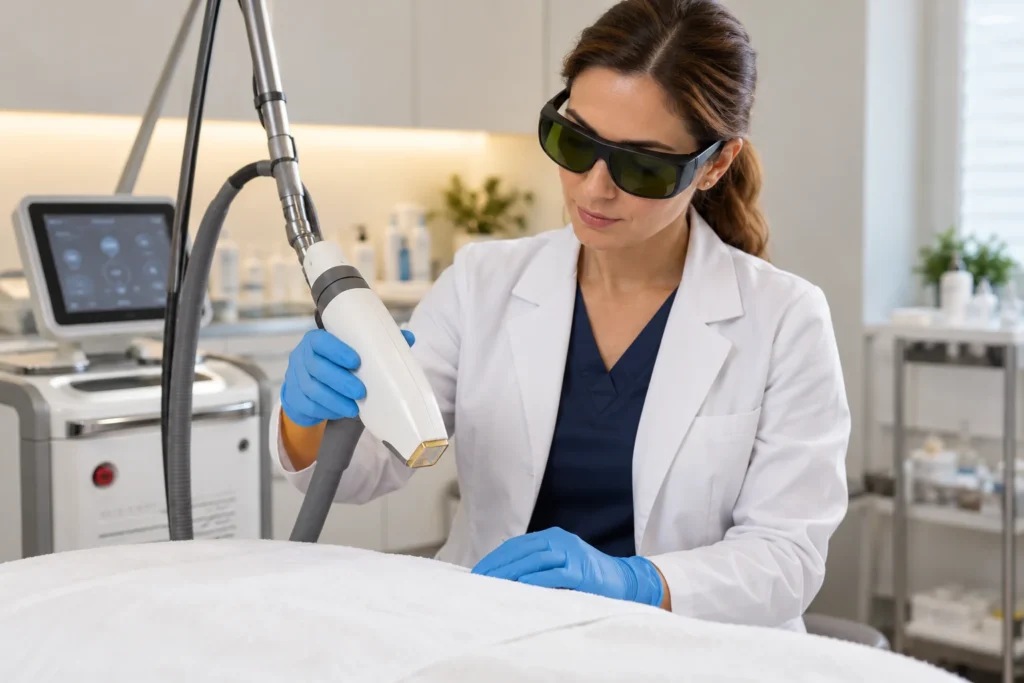
Emre Gültekin considers these matters with Vensa Law in Istanbul. The first discussion separates what happened from what remains to be assessed. A disappointing result, a skin change or an allegation that the wrong setting was used each raises a different question. An individual review needs the patient's baseline, the plan, the recorded procedure and the subsequent course. It should not begin with an assumption that every adverse effect proves negligent treatment or that every effect described as expected was properly assessed.
Identify the device and the treatment purpose
Ask for the device manufacturer and model recorded for the relevant session. Where the provider used a term such as laser, IPL or another technology, preserve the wording rather than silently converting it into a technical description. If you photographed the machine, keep the original file with the date and context. A photograph of equipment in a room does not necessarily establish which device was used on you.
Describe the stated aim: reducing hair, addressing an existing mark, changing skin texture or another purpose. Record the body area and any difference between what was booked and what occurred. Technical information should be interpreted by an appropriately qualified specialist, not inferred from advertising or a number visible on an image. A legal representative can identify the evidence needed to ask a meaningful technical question without advising a patient on which device or setting should be used.
Assessment before the first session
The initial assessment may be relevant to whether the proposed treatment was appropriate for the particular patient. Preserve the history form, consultation notes and any instructions given beforehand. Explain what the provider asked about your skin, previous procedures, medicines or other relevant circumstances, and what information you supplied. If you do not remember a question, distinguish that uncertainty from a definite recollection that it was never asked.
A lawyer will not diagnose a skin type or determine suitability from a photograph. If the adequacy of assessment is disputed, a clinician may need to examine the information available before treatment and explain its significance. Later knowledge should not be presented as if it was available at the first appointment. Conversely, an incomplete record may leave a question requiring clarification. The legal work identifies the alleged omission and the consequence said to follow, rather than assuming that the existence of a signed form completes the assessment.
Expectations, alternatives and informed agreement
Keep the explanation of the expected result and its limits. For a course of sessions, distinguish the planned aim from a guarantee you believe was specifically made. Written estimates, advertisements viewed when booking and personal messages can help establish what was represented. An online promise should be preserved with its source and date; an edited screenshot may leave out qualifications that matter.
Consent also concerns the information relevant to the proposed intervention, including possible unwanted effects and follow-up. Note whether the documents correspond to the actual procedure and area treated. If a different technique or additional area was introduced on the day, explain how that change was discussed. A signature is important evidence, but it does not by itself answer every dispute about the conversation. The significance of an alleged information gap needs to be assessed within the patient's particular decision and treatment circumstances.
Build a session-by-session chronology
Laser enquiries often involve a series of appointments. Make a separate entry for each, showing date, area, practitioner, device information known to you and the response afterward. Include appointments that appeared uneventful as well as the session you consider problematic. If the practitioner or device changed, record when you became aware of the change and what explanation was given.
Where a test or preliminary assessment was performed, identify its location and timing without assuming that it proves every later session was appropriate. The complete course may help explain how treatment decisions developed. If you stopped attending, record why and whether the clinic was informed. Where several body areas were treated differently, avoid merging the symptoms into one timeline. A clear sequence allows the specific session and alleged failure to be investigated rather than attributing every later change to the whole package.
What technical records may help
Relevant records may include the session notes, device identification, treatment area, recorded parameters, operator details, consent and aftercare instructions. The precise material available depends on the system and provider. Ask for what exists and identify a missing item without inventing what a complete file should contain in that particular setting. If a provider supplies a summary instead of underlying notes, retain both the request and response.
A number on a device screen is not meaningful without context. Device type, purpose, patient assessment and other recorded information may all affect interpretation. Do not compare your settings with a stranger's online image and treat the difference as proof of fault. An expert question should identify the actual alleged problem and the relevant circumstances. Legal preparation can organize the technical material and expose gaps, while the specialist explains whether the records support a conclusion about the treatment delivered.
Describe skin changes accurately
Medical lasers can cause adverse effects, including scarring or changes in skin colour. Their presence does not, on its own, establish the cause or legal responsibility. Describe what you observed, the first date noticed, the area involved and the progression. If a healthcare professional diagnosed a condition, retain the written assessment and identify when the examination occurred.
Take appropriate medical advice where symptoms are concerning, severe or worsening. Do not delay care while waiting for the clinic or a lawyer to respond. For the legal file, distinguish your description from a clinician's finding and from a prediction about permanence. A mark that is still present is not automatically proof of a permanent condition. Similarly, a reassurance that it will settle should be evaluated as part of the response, not treated as a substitute for an assessment where one was required.
Preserve photographs without losing their context
Use original dated images where possible. Note whether they show the area before treatment, immediately afterward, during recovery or after another intervention. Differences in lighting, distance, angle and editing can affect how a mark appears. A clinician's photographs and your own images may serve different purposes; neither should be altered to make the comparison more striking.
If the treated area is private, discuss a proportionate way to share the material needed for assessment. Do not include another person's image or health information simply to show that similar complaints exist. Your claim must be connected to your own treatment. A complete sequence may help locate when a change became visible, but it may still require clinical interpretation. The photograph's evidential role should therefore be explained rather than overstated: what can it show, and what question remains unanswered?
Aftercare instructions and the patient's account
Preserve the instructions you actually received, including written materials and messages. Explain whether they were supplied before the appointment, on leaving or only after you reported a concern. If the clinic says a particular instruction was not followed, identify the relevant document and what you understood at the time. The review should consider the actual exchange rather than a generic leaflet downloaded later.
Be candid about subsequent activities, products used, further treatment and advice from another professional where relevant. This is not an invitation to blame the patient or to assume an alternative cause. It enables the specialist to assess the history fairly. If two professionals gave different advice, record each instruction with its source and date. A legal assessment can then examine the alleged failure and response on an accurate factual basis instead of overlooking information that may later become central.
The clinic's response to a reported problem
Retain the first report, attachments, acknowledgement and later answers as a complete conversation. Identify who responded and whether a clinical review, photograph assessment or in-person examination was offered. If you were told to continue the course, pause it or seek another opinion, preserve the exact advice. An administrative message should not be attributed to a treating clinician unless that connection is established.
The response may raise a separate issue from the session itself. A recognized treatment risk does not answer whether a later concern was appropriately evaluated. Equally, an apology or offer to see you again does not automatically establish an admission of negligence. The relevant questions are what information was available, what action followed and whether any alleged delay or omission affected the outcome. Those questions should be defined before a technical opinion or formal allegation is prepared.
Distinguish injury from a dispute about effectiveness
A patient may complain that the promised improvement did not occur even without an identified injury. Another may report a clinically documented adverse change. Some enquiries involve both. These situations can engage different evidence: the representations and package terms may be important to one issue, while clinical records and causation may be central to another. Describe both clearly if they apply.
For a series of hair-removal or resurfacing appointments, keep any discussion of the anticipated course and further sessions. Do not treat the number of appointments alone as proof that the provider performed negligently. The assessment may need to address what was agreed, whether the plan changed and how the patient's response was reviewed. A comparison with another person's results cannot establish what should have occurred in your circumstances. The objective is to identify the precise obligation said to have been unmet.
Causation and independent technical input
An independent opinion should explain the history, documents considered, present findings and reasoning. A label such as “laser damage” may not answer whether the care fell below the relevant standard or which session caused the change. The question put to the expert should be sufficiently specific to connect the allegation, evidence and claimed consequence.
Disclose earlier skin conditions, other procedures and subsequent treatment where they may affect the assessment. A later intervention can change appearance and the material available to examine the original problem. That does not mean necessary care should be postponed; it means the records of that care should be preserved. Emre can work with the patient to organize the legal questions, while the appropriately qualified professional addresses the clinical or device issue. Neither role should be presented as guaranteeing the other's conclusion.
Costs, losses and remedial proposals
Keep receipts for the course, individual sessions, assessments and any later care. Separate unused prepaid sessions from treatment already received. If the clinic offers a refund or credit, identify the amount, conditions and the party making the offer. Further treatment should not be accepted merely to improve a legal position; its clinical suitability needs appropriate advice.
Document any alleged additional expense with the date, currency, recipient and reason it arose. Work-related or other losses require an honest explanation and supporting material where available. A proposed future expense should be identified as an estimate. Not every payment following the appointment is automatically recoverable. The legal basis, connection and proof must be assessed. Avoid relying on compensation figures from unrelated online cases, because the treatment name alone does not determine the remedy or value of an individual enquiry.
Selecting a route and preserving the position
The correct process depends on the provider's status, the relationship and the outcome sought. Record access, regulatory concerns, negotiation and a compensation claim are not identical routes. An informal request can produce useful information without necessarily preserving every legal right. Advice should be based on the actual Turkish circumstances rather than on overseas rules about device use or practitioner registration.
If a formal notice or decision arrives, send it promptly in full with delivery details. Do not assume discussions with the provider suspend time limits. The first stage of work can identify urgent questions, missing evidence and the scope of a possible technical review. Fees, expenses and representation arrangements need to be discussed for the file. No particular court outcome, refund or compensation can responsibly be promised before the evidence and applicable process have been examined.
Your first conversation with Emre
Begin with the exact procedure, provider, treatment dates, the session you are concerned about and the principal change you reported. A concise chronology and index of the records available are more useful than a large unlabelled photo collection. Explain where you now live, whether further healthcare is ongoing and whether another representative has already taken steps.
Emre Gültekin works with the Vensa Law team in Istanbul. English and Turkish communication can support the preparation of a clear account and a focused discussion of next steps. Translation, authorization and any attendance requirements depend on the chosen procedure. Contacting the office does not itself establish an attorney–client relationship or acceptance of a case. The purpose is to move from an unresolved laser-treatment concern to defined factual and technical questions, then make an informed decision about the legal work appropriate to the information available.