

Establish which part of implant treatment is in question
A dental implant enquiry should begin with the actual treatment rather than the advertised package. The implant placed in the jaw, the connecting components and the restoration visible in the mouth are different parts of a treatment arrangement. A concern about a loose crown is therefore not automatically the same concern as one about the implant itself. The patient does not need to identify the technical cause before asking for legal help, but should describe what happened and what the treating team said about it.
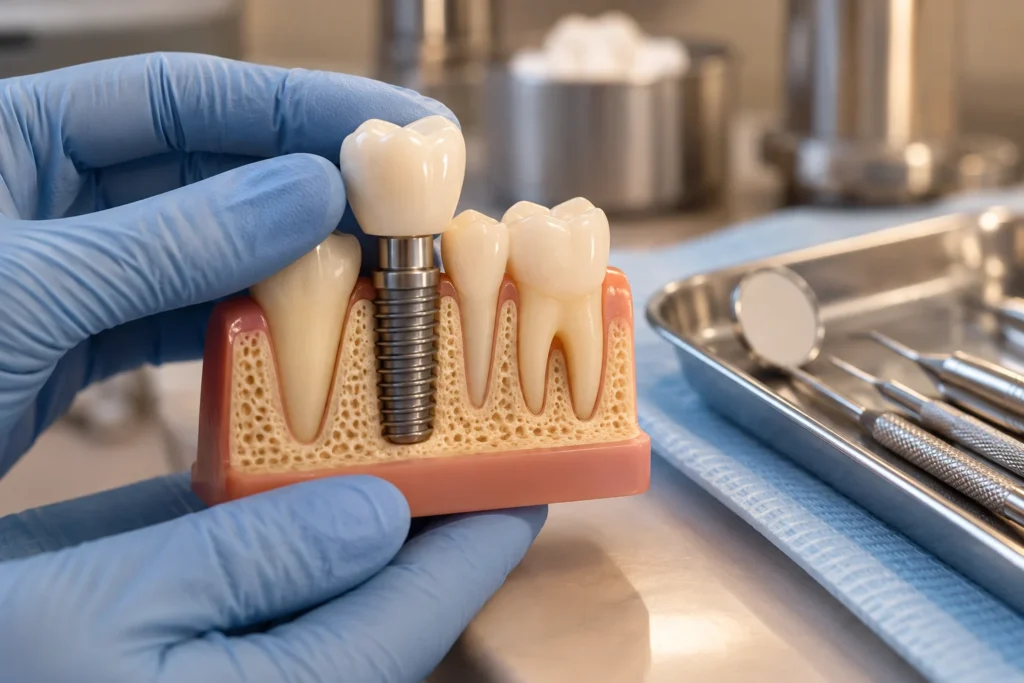
Emre Gültekin can review a concern about implant treatment in Turkey through the records, the treatment agreement and the sequence of events. The first objective is to distinguish the proposed work from the work performed and to identify the issue requiring investigation. Removal, further treatment or an unsatisfactory appearance does not establish liability on its own. A useful assessment considers the clinical evidence alongside the information provided, the decisions made and the response when the patient reported a problem.
Reconstruct the original assessment
The position before treatment matters. Gather the initial examination, imaging, dental history and treatment proposal, together with records from earlier dentists where available. Note whether the proposal was made remotely, after an examination in Turkey or after additional investigations. A preliminary quotation based on photographs may have had a different role from a final clinical plan. The legal enquiry should establish what each document represented rather than treating every quotation as a completed clinical assessment.
Information the patient supplied about health, medication and previous dental treatment should remain in the file. Its relevance is a matter for appropriate clinical review, not a reason for the patient to decide the case against themselves. Equally, important information should not be withheld because it seems unhelpful. If the clinic changed its recommendation after receiving further information, preserve the explanation and date. A reliable account allows an expert to consider the decision using the circumstances known at that time.
Map every implant and restoration
Where several implants were planned, create a record for each site using the clinic's identifiers where possible. Link that site to the relevant procedure date, product information, restoration and later complaint. If the patient is unsure which number describes a particular tooth or implant, mark the uncertainty. A simple diagram can assist communication without replacing the clinical chart. An invoice listing several implants may need to be compared with the actual procedure notes to establish what was placed.
The number of visible replacement teeth need not describe the number of implants supporting them. For that reason, a package description should not be used as the only guide to the arrangement. Ask for the final treatment summary and any information provided for future dental care. If a later dentist uses a different identifier, retain that record in its original form and explain the apparent difference. Resolving the map early helps avoid attributing a symptom or a repair to the wrong site.
Separate preparation, placement and restoration
Authoritative patient information describes implant care as a course that can include assessment, preparation, placement and restorative work; some patients also require additional procedures. This general explanation is not a fixed timetable for an individual patient. The file should show the stages actually proposed, the reasons recorded for them and the steps completed. A disagreement about an unfinished restoration raises different questions from a concern about an implant already placed and subsequently reviewed.
Where extraction or bone grafting was also undertaken, identify its date and the provider involved rather than folding it into a single label. Preserve the consent material for those procedures and the explanation of how they related to the implant plan. The fact that several steps occurred close together does not by itself decide whether care was appropriate. Nor does a longer course prove adequate planning. The relevant assessment concerns the individual circumstances, the documented clinical reasoning and the care actually delivered.
Examine what the patient was told before deciding
The consent enquiry includes what was explained about the proposed implant treatment, reasonable alternatives and the uncertainties relevant to that patient. Keep the documents provided before travel as well as those signed at the clinic. A general form may need to be considered alongside the consultation itself. If the plan changed from a bridge to implants, or the number of planned sites changed, record when the patient learned of that change and how the decision was discussed.
Patients sometimes remember a strong assurance that treatment would be permanent or that a particular problem could not occur. Preserve the exact written wording where available and distinguish it from a later recollection. The meaning of a commercial guarantee may differ from a clinical explanation of expected outcomes. An assessment should not assume that a signature resolves every question, or that an adverse event proves the information was inadequate. Both the content and the context of the decision require examination.
Preserve imaging and product identification
Implant records may contain images from different stages, operative notes, product labels and information about the components used. Request existing records in a form that preserves their usefulness. A photograph of an image on a screen can lose information available in the original file. Keep dates, provider details and any reports together, while retaining unaltered copies. The aim is to make the treatment traceable, not to perform an independent interpretation of technical images without a qualified professional.
Product identification can be important when another dentist is considering maintenance or corrective work. If the clinic supplied an implant passport, sticker sheet or component list, keep it with the treatment record. Do not infer a product defect merely because a component cannot immediately be identified. Questions about the product supplied, its placement and the work later attached to it may require different evidence. A legal review can identify which uncertainty needs a further record request or an appropriately qualified technical opinion.
Describe the reported problem without deciding its cause
A patient may report pain, movement, a change in sensation, difficulty using the restoration or an appearance that differs from what was discussed. Write down the observation, its location and when it was first noticed. Include what the dentist said at the time, rather than substituting an online diagnosis. A new symptom can justify prompt clinical attention while its relationship to earlier treatment remains uncertain. The legal process does not replace assessment of a current health concern.
The chronology should include periods when the patient had no complaint, changes after later treatment and any interruption in follow-up. This detail helps test competing explanations. An implant being removed or described as unsuccessful is an event requiring investigation, not a complete explanation of responsibility. An expert may need to distinguish the condition at placement, the subsequent course and the management of the reported difficulty. A balanced account preserves relevant information even when it does not fit the patient's first theory.
Assess the response to concerns and follow-up arrangements
Keep the full exchange in which the problem was reported, including photographs sent and appointments offered. Record whether advice came from a dentist, a coordinator or another person, and whether an examination took place. A short message may not reveal the clinical information available to its sender. The enquiry should therefore connect the communication with the records of any assessment. Missing answers and practical obstacles can be described precisely without assuming what an unseen clinical record contains.
For international patients, the follow-up plan deserves particular attention. Establish what was said about returning to Turkey, obtaining local care and sharing records with another dentist. If a proposed return was impractical, explain why and retain the relevant correspondence. Travel difficulty does not determine the clinical standard, but it may help explain the actual sequence. Do not postpone appropriate care while waiting for legal advice or a response from the original clinic. Current treatment decisions belong with the patient's healthcare professionals.
Analyse the restoration as well as the implant
An implant-supported crown, bridge or denture can raise concerns that need to be investigated separately from the placement procedure. Identify which part was adjusted, repaired or replaced and which provider carried out that work. Records of impressions, scans, trials, laboratory work and delivery may help clarify the process. If the patient approved an appearance at a trial, preserve the relevant material. That approval has a particular context and should not be treated as an answer to every later functional concern.
Document difficulties with chewing or speech through concrete examples rather than dramatic general statements. Distinguish what the patient experiences from the explanation offered by a clinician. When a second dentist proposes altering the restoration, ask for the stated purpose and the records of what was found. That proposal may address the current condition without reaching a conclusion about the original placement. A review should keep these questions separate so that a concern about one stage does not obscure another potentially important issue.
Understand later opinions and proposed corrective work
A second opinion is more useful when it identifies the information reviewed and explains the reason for the proposed treatment. Preserve the examination record and any images made before corrective work changes the position. This does not mean delaying necessary care to obtain a preferred type of report. It means keeping the records that treating professionals create during appropriate care. If the opinion relies only on a current examination, its ability to explain earlier events may have limits.
Different corrective proposals may reflect different objectives, assumptions or available information. One plan should not be presented as the only possible remedy without examining those differences. Separate urgent care, proposed reconstruction and an optional change in appearance. Distinguish estimated costs from expenses already incurred. The connection between a proposed expense and an alleged failing in the original treatment may need both clinical and legal analysis. The most expensive quotation is not automatically the measure of a legally recoverable loss.
Identify the people and organisations involved
Implant treatment may involve a dentist, a clinic, a separate restorative provider, a laboratory and an intermediary arranging travel. Keep the full names appearing on the contract, receipt and clinical records. A brand name on a website may not be the legal identity of the party providing a particular service. The responsibilities of each participant need to be established from their actual role. A coordinator's involvement does not, by itself, answer who made a clinical decision or performed a procedure.
If payment went to a different organisation from the one named on the treatment record, preserve the explanation and the transfer details. Note where each procedure took place and who communicated the treatment plan. These details help a lawyer assess the appropriate parties and procedural route. They also prevent a complaint about one aspect of the package from being attributed indiscriminately to everyone involved. The assessment should remain specific about what each person or organisation is said to have done.
Evaluate offers, expenses and earlier agreements
A clinic may offer a replacement component, another procedure, a refund or a discounted return visit. Obtain the terms in writing, including what is included and whether any release or settlement is required. A repair offer is not automatically an admission of fault. Conversely, the availability of an offer does not establish that it addresses the patient's clinical and legal concerns. A patient can seek independent clinical advice on the proposed work and legal advice on any document requiring signature.
Keep treatment payments separate from travel costs, later dental expenses and other claimed consequences. Record refunds already received and identify expenses supported only by estimates. If another complaint or legal process has started, share its documents and status. Signed agreements and previous correspondence may influence the options available. Avoid choosing a legal route from a general internet timetable. The relevant procedural requirements and time issues depend on the particular facts and should be reviewed promptly using the actual records.
Plan a focused consultation with Emre Gültekin
For an initial discussion, prepare a concise timeline, the treatment plan, the available clinical records and an explanation of the current concern. State the patient's priority: understanding a repair offer, obtaining missing records or examining a potential claim may require different first steps. List documents requested but not received. Emre Gültekin can discuss the scope of legal review within Vensa Law, including whether further documentation or independent expertise is needed before an informed view can be reached.
Agree the engagement terms, likely stages of work and communication arrangements before relying on any proposed course. An initial enquiry does not guarantee representation, a refund or compensation. For information about the firm, visit https://vensalaw.com/. English enquiries can be directed to +905369968588 or [email protected]. Start by arranging a suitable channel for sensitive records rather than distributing extensive medical material indiscriminately. A well-organised implant file enables more useful questions, while preserving the distinction between clinical care and legal assessment.